Skip to content
Product Design Lead · Complex SaaS · AI UX · UX Architecture

Matija Vojvodic

I design product systems that make complex SaaS and AI products easier to understand, build, and scale.

NowProduct Design Lead at Zenitech / Quantum Health
Experience8+ years across UX, design systems & frontend
RecognitionAward-winning designer & ADPList Elite Mentor
The problem

Most product confusion starts before the first screen is designed.

Confusing products usually come from unclear foundations: undefined objects, mismatched language, hidden assumptions, weak information architecture, disconnected workflows, and business rules that never became visible.

By the time this reaches the UI, the interface is only exposing a deeper structural problem. My work starts there.

Expertise

The work I own, end to end.

Four disciplines I lead outright – from the data model under the product to the moment a user converts.

Product architecture

I define the structure a complex product stands on – objects, relationships, and navigation that match how the backend and the user both think.

  • Object-oriented product modeling
  • Complex SaaS information architecture
  • Workflow & permission mapping
  • Navigation & UX infrastructure

AI interfaces built to convert

AI that isn't just smart – interfaces where assistance, explanation, and automation are engineered toward trust and conversion.

  • AI product workflows
  • Persona-ready conversion journeys
  • Onboarding that turns understanding into action
  • Trust, explanation & feedback loops

Backend-informed design systems

Token-driven systems designed against the real data model and frontend states – so components hold up in production, not just in Figma.

  • AI-ready token & component systems
  • Engineering-aware states & edge cases
  • Interface & interaction detail

Agentic design workflow

I design with AI agents in the loop – from concept to working code, so decisions are tested in the real product, not in mockups.

  • Agent-driven prototyping in real code
  • Claude Code, CLI & Git workflows
  • Design-to-production continuity
Selected work

Product systems, end to end.

A few case studies – from research and object models to the design system and the interface that shipped.

Working on something complex right now?

Book an intro call
Proof

Experience behind the thinking.

This approach comes from real product environments, not isolated design exercises – complex SaaS, healthcare platforms, event technology, design systems, AI product concepts, frontend implementation, and founder-led marketing websites.

Zenitech / Quantum Health

Product Design Lead

Current

Leading product design for a complex AI-driven healthcare platform – balancing hands-on product strategy, UX architecture, and interface design with leading a team of six across interconnected product areas. Grounding decisions in real data structures and scalable interaction patterns.

Team
6 designers
Healthcare AIUX architectureDesign systemsLeadership

AI Startup (Stealth)

Founding Product Designer

2025 – 2026

Defined the product architecture and object model – the foundation for backend data structure and information architecture. Designed the first MVP, ran early quantitative testing, and built scalable interaction patterns connecting design, engineering, and product.

0 → 1Object modelingMVPAI product

Ostre

Principal Product Designer

Current

Independent studio designing SaaS and AI-driven products – UX architecture, product design, and design systems for 0-to-1 and MVP builds, with design leadership and clarity across complex workflows.

Client satisfaction
100%
UX architectureLeadershipProduct designDesign systems0–1MVP

Sweap

Founding Product Designer

2021 – 2024

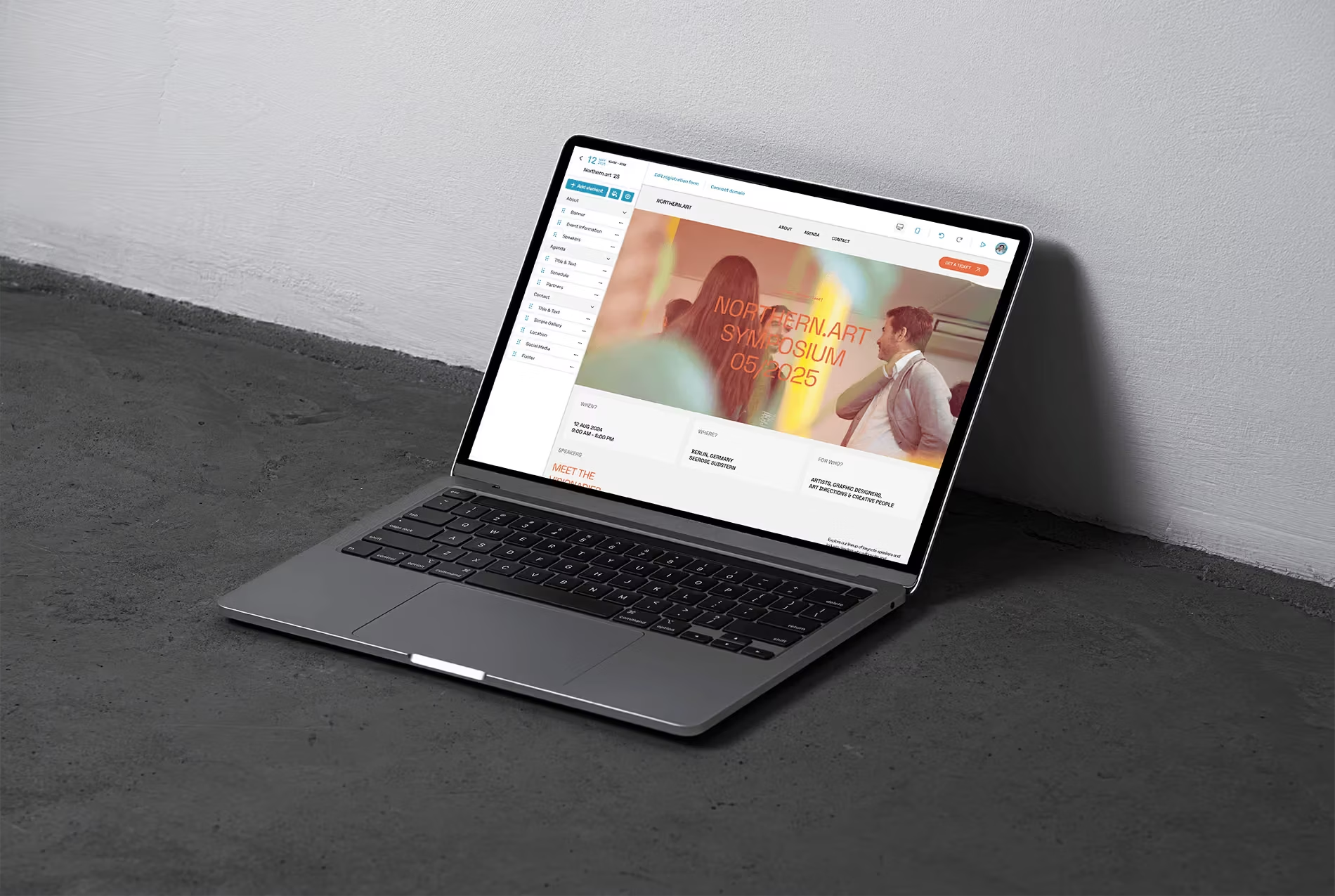
Founding designer at an event-technology SaaS. Led a full UI/UX overhaul, established the design system, and built the design practice and handoff process from the ground up.

User engagement
+16%
Net dollar retention
103% → 119%
ARR
+26%
Event tech SaaSDesign system0 → 1 practice
Process

From first call to shipped product.

Five steps, each one built to make the next decision easier – research feeds structure, structure feeds design, and design lands in working code.

  1. Step 130 minutes

    Intro call

    A 30-minute conversation about your product, your domain, and where clarity is breaking down. No deck, no pitch – just questions.

  2. Step 21–2 weeks

    Research & mapping

    Domain research and object discovery – mapping users' mental models, the language of the domain, and the objects, relationships, and rules behind it. Assumptions become explicit, hidden logic becomes visible.

  3. Step 31–2 weeks

    System architecture

    Object models, information architecture, and workflows that match the mental model – the structure everything else is built on.

  4. Step 42–6 weeks

    Design & prototype

    Interfaces, design system components, and working prototypes – increasingly built in real code with AI in the loop, so decisions are testable.

  5. Step 5Ongoing

    Ship & iterate

    I work directly with engineers through implementation, then measure, refine, and keep the system coherent as the product grows.

FAQ

The questions that come up on every intro call.

What kind of work do you take on?

Product design leadership for complex SaaS and AI products: UX architecture, AI product workflows, object-oriented product modeling, and design systems. I'm most useful where the product is powerful but hard to understand.

How do we start?

With an intro call. You get a short written proposal after it – scope, timeline, and what you'll have at the end. No long discovery phases before you know what you're buying.

Do you work alone or with our team?

Embedded. I work directly with founders, product managers, and engineers – currently leading a team of six designers in an AI healthcare product. Handoff documents are a last resort; shared understanding is the goal.

Where are you based?

Berlin, working remotely. Most of my collaborations run across European time zones, with overlap hours for US teams.

We just need more screens, faster. Is that you?

Probably not. If the foundations are clear, any good designer can produce screens quickly. I'm the person you bring in when screens keep getting produced and the product still confuses people.

Building something complex?

Turn complexity into a system people can trust.

I help turn unclear product ideas, messy domains, and AI/SaaS complexity into systems people can understand, use, and trust.