Vaadin Collaboration Kit Challenge · Solo concept · 2 min read
2nd of 120+: real-time collaboration for the small team inside a big company
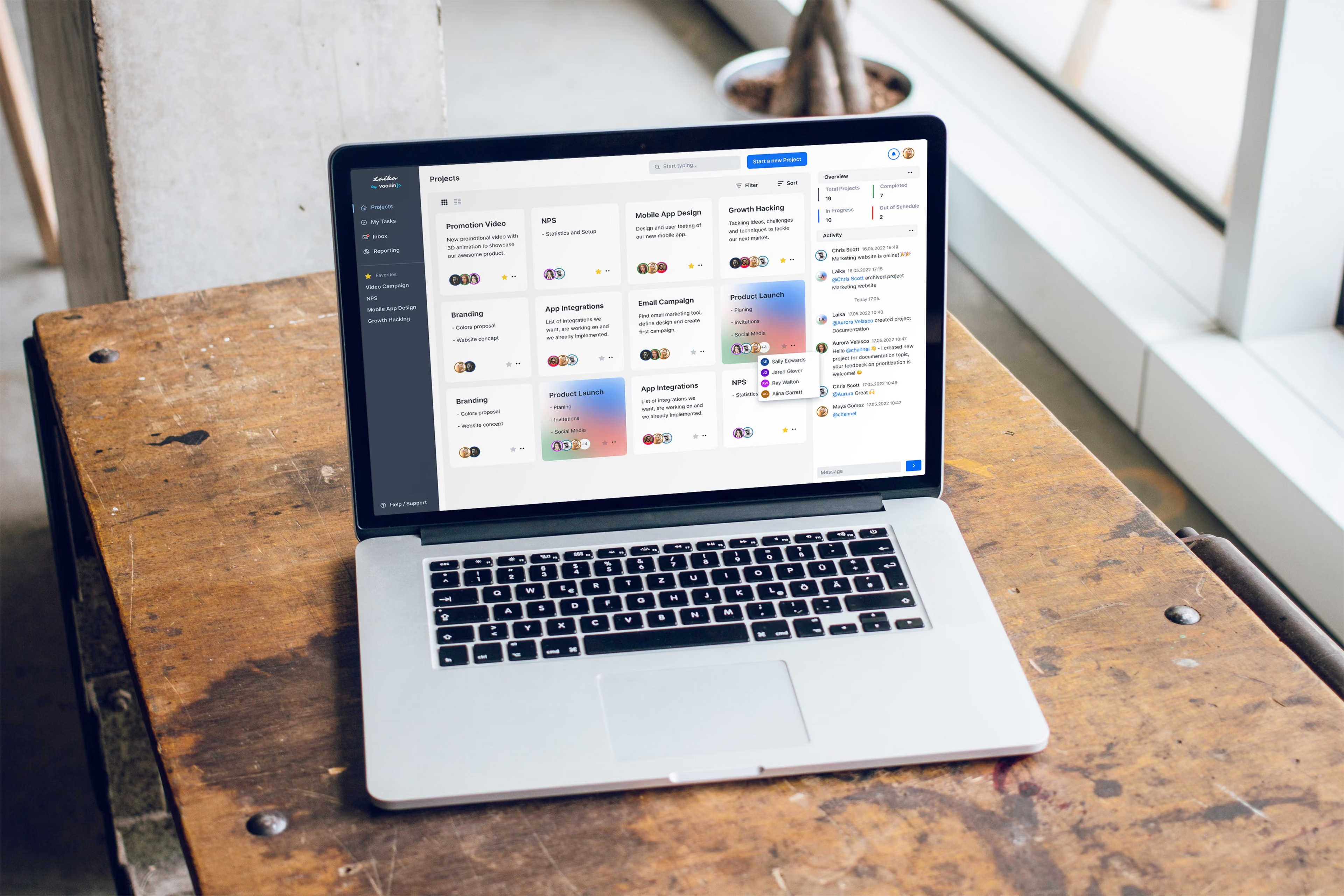
Vaadin's Collaboration Kit Challenge asked what real-time collaboration could add to a business application. Instead of another general project tool, I designed Laika for small teams inside large organisations, with presence, activity and early AI insight built into the product's objects. It placed second in the design category among 120+ entries, and my feedback fed into Vaadin's component modernisation.
- Real-time collaboration
- Design challenge
- 2nd of 120+
2nd
Design category, Vaadin Collaboration Kit Challenge
120+
Entries in the challenge
An open challenge needed a specific problem
The brief didn't prescribe a problem, so choosing one was part of the work. Interviews with developers, designers and project managers pointed to a gap: small teams inside large organisations inherit tools built for much bigger structures, while lighter tools cut them off from the company's platform.

DecisionI designed for teams of 3 to 8 inside a larger organisation, leaving out enterprise administration, cross-programme reporting and deep hierarchies.
OutcomeLaika gained a clear centre: projects, tasks and the people working on them, understandable at a glance.
Collaboration belonged on the task, not in a feed
Projects and tasks carry presence, activity, comments and ownership, and the team view shows current work without piecing it together from other channels. I designed against what the Vaadin Collaboration Kit actually supported; when an interaction wasn't possible, the design adapted.
›


DecisionI built collaboration into the product's objects instead of adding a chat or activity feed beside them.
OutcomeA task shows who is editing it, who changed it and what was discussed, without a separate feed.
AI should reason over the team's own work
I explored AI that reasons over the team's projects, tasks, people and deadlines: what changed this week, what is late, who looks overloaded. Answers come back as familiar reports and project status, not a generic chat.
DecisionI kept AI at prototype fidelity and tested the interaction model, because the framework couldn't yet support it credibly.
Extend the design system, don't replace it
I started from Vaadin's design system and extended it for denser collaboration: status and priority tokens, presence states, avatars, cards, dialogs and panels, all within tokens and variants.

DecisionI extended Vaadin's design system instead of inventing a new visual language, accepting less visual freedom for a concept that could belong in their ecosystem.
OutcomeThe work surfaced consistency and usability issues in the component set; Vaadin folded the feedback into its component modernisation and published an interview about the design process.