End-to-end design for a digital services marketplace
End-to-end product design for Flexifind – from business context and research to an OOUX architecture, wireframes, a high-fidelity prototype, and a full design system.
- Client
- Flexifind
- Role
- Senior Product Designer
- Year
- 2025
Overview
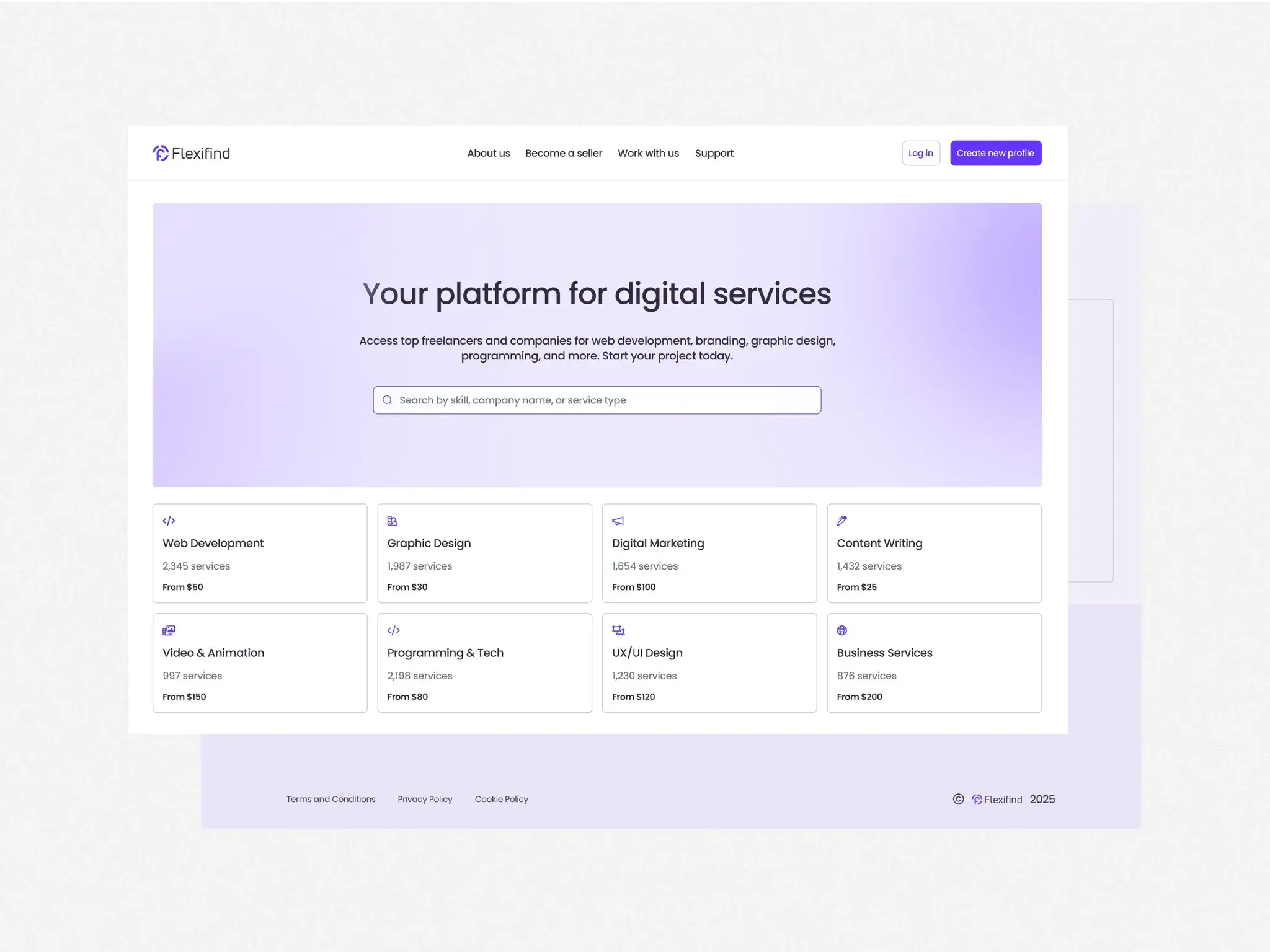
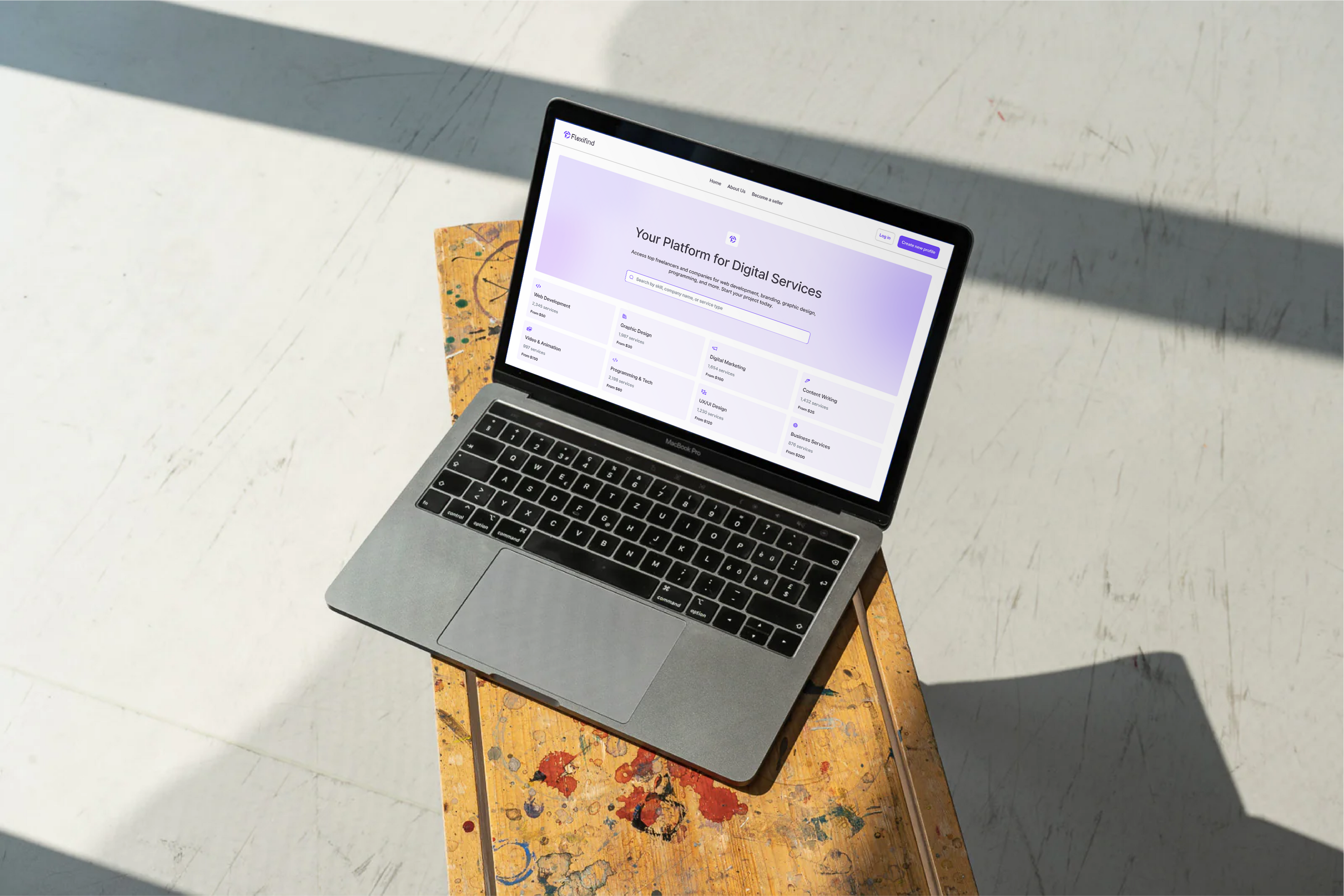
Flexifind is a commission-based B2B marketplace for digital services, with escrow and automated payment distribution. I designed it end to end – from research and information architecture to a high-fidelity prototype and a full design system.
Business context & goals
The MVP focused on user activation, platform trust, and transaction conversion. The targets were concrete:
- Increase browse-to-signup conversion
- Build confidence in milestone-based payments
- Streamline freelancer onboarding
- Let studios form teams with automated revenue splitting
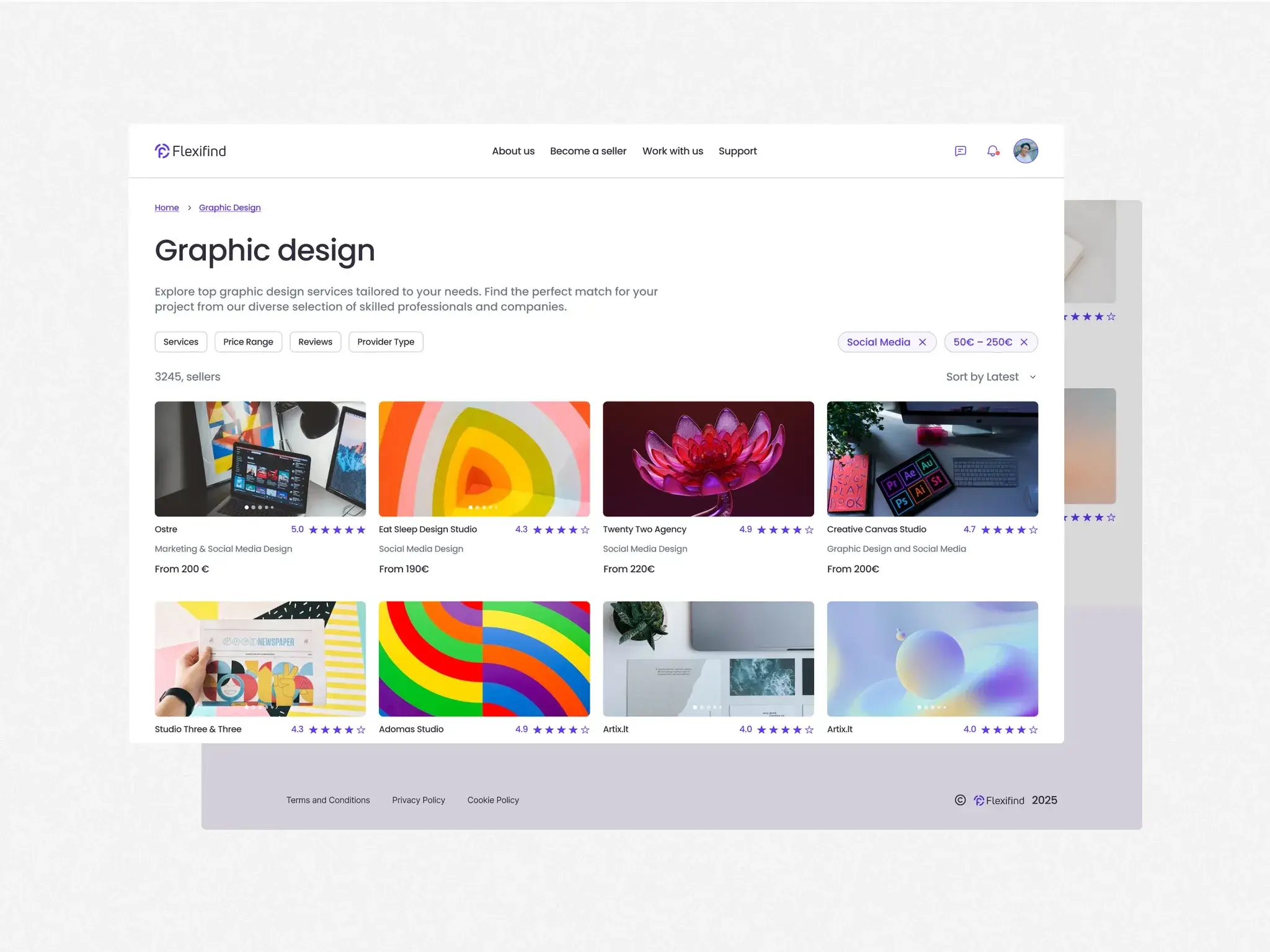
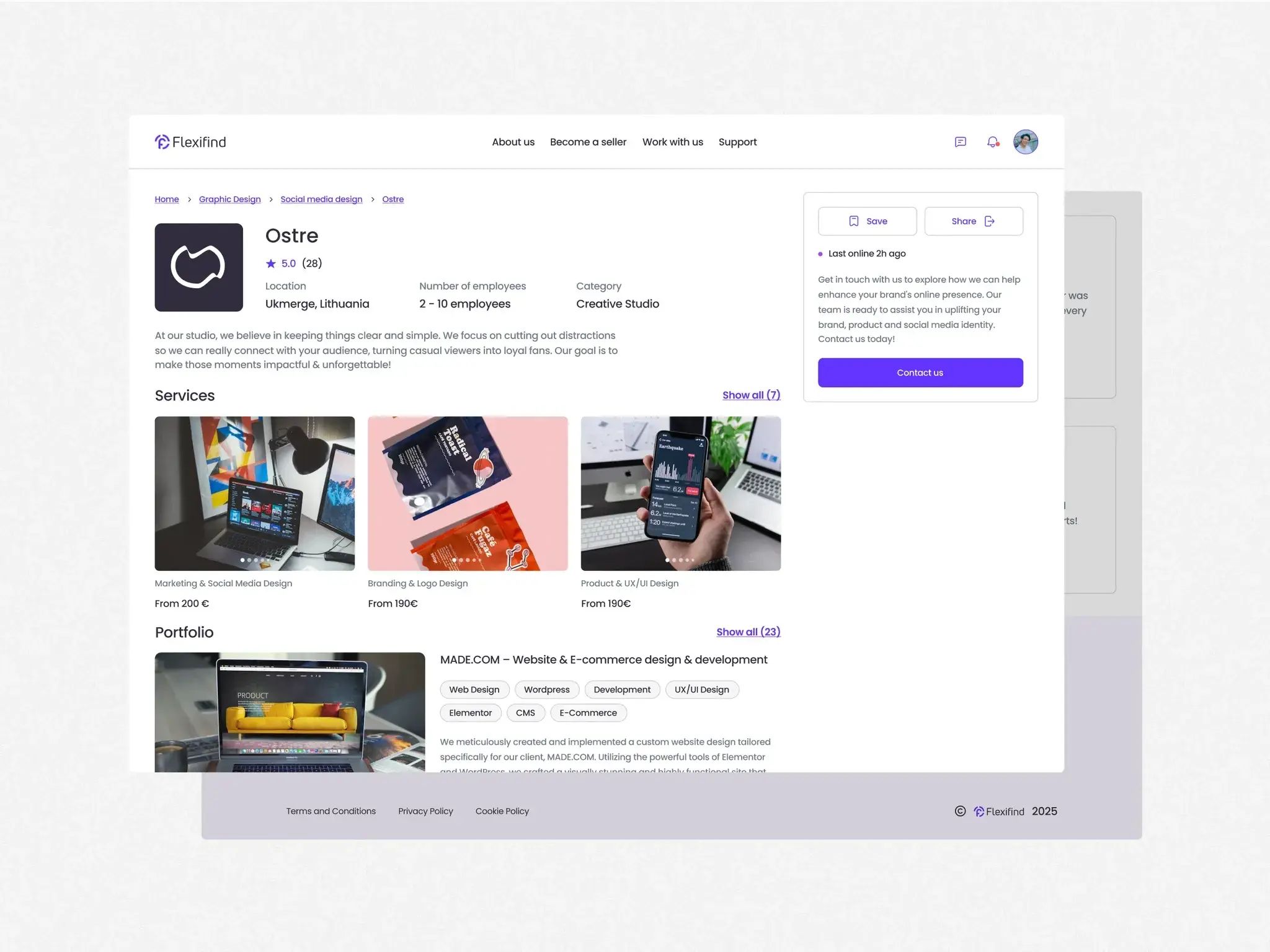
- Help clients evaluate providers faster
Problem & opportunity
Freelancers are stuck with expensive subscriptions and rigid payment terms; studios struggle to coordinate teams and split income; clients feel uncertain choosing a partner. The opportunity was to reduce financial risk, increase transparency, and speed up hiring.
Research
Interviews with freelancers, studio operators, and clients surfaced three core needs:
- Balanced payments where neither side carries disproportionate risk
- Low-friction browsing before sign-up
- Team coordination with built-in payment splitting
Key design decisions
- Let people browse before requiring an account
- Replace preset payment structures with flexible milestones
- Use concise service-comparison cards for fast assessment
- Support studio-style teams with revenue distribution
- Make escrow terms transparent to reduce hesitation
UX architecture (OOUX)
I used Object-Oriented UX to decode the workflows. Seven core objects anchored the system – Service Provider, Client Organisation, Service, Job Request, Proposal, Team Member, and Portfolio Item – with clearly mapped relationships between them.
Wireframes & prototype
Low- and mid-fidelity wireframes validated onboarding, payment configuration, and browsing. A high-fidelity prototype with real content then tested cross-screen consistency, edge cases, and multi-freelancer projects – the basis for the design system.
Dashboards & workspaces
Two purpose-built environments support the full engagement lifecycle: a Provider Dashboard (project tracking, analytics, team and service management, proposals, and portfolio) and a Client Project Workspace – each shaped around its users' goals and flows.
Design system
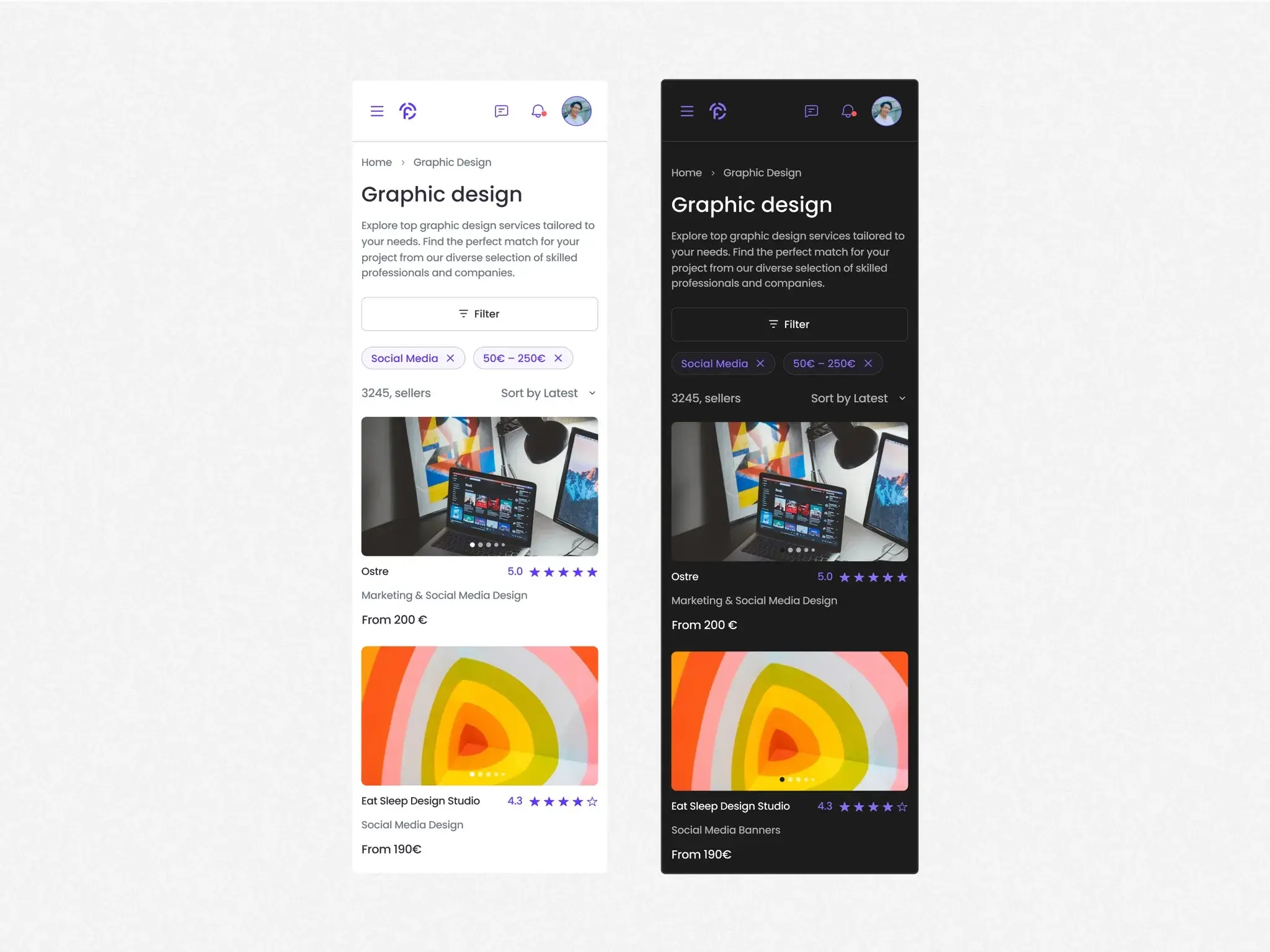
I built a tokenized design system across light and dark themes: foundations (color, typography), components (buttons, navigation, cards, inputs, search), specialized widgets (status trackers, step dialogs, tables), and page templates – documented in Figma with change logs for developers and stakeholders.